
Fence & Deck Painting in Cleveland: Extend the Life of Your Outdoor Surfaces
Summary
- Learn why paint protects fences and decks from Cleveland weather.
- See how long coatings last and when to repaint.
- Compare DIY vs pro results and real Cleveland costs.
- Get prep steps, color ideas, and product picks that work.
Introduction
Cleveland weather is tough on outdoor wood. Freeze and thaw cycles open checks. Summer sun bakes finish. Moisture feeds mildew. Paint stops water, blocks UV, and keeps surfaces clean. Your fence and deck last longer when you keep a sound coating on them.
If you want a durable finish and clean lines, work with Artisan Painting. Our team knows local wood species, fasteners, and site conditions. We use proven prep and products that hold up in Northeast Ohio.
Working with experienced painters in Cleveland Ohio ensures your fence or deck gets the prep and protection it needs to survive local weather swings. Skilled crews understand how Northeast Ohio moisture, sun exposure, and older lumber profiles affect adhesion and durability. Their techniques keep coatings stable through harsh seasons and help your exterior wood stay solid and attractive longer.
If you are searching for fence painting Cleveland options, this guide shows you what to expect, how to time your project, and how to budget.
Why Paint Your Fence or Deck?
What problems does paint solve?
- Stops water from soaking into boards.
- Reduces cracking from freeze and thaw.
- Blocks UV that grays wood and weakens fibers.
- Smooths splinters and rough grain.
- Seals fastener heads to slow rust stains.
- Makes cleanup simple. Dirt and mildew wash off faster.
What benefits will you see?
- Longer service life for wood and hardware.
- Better curb appeal and HOA compliance.
- Safer walking surfaces when using anti-slip deck systems.
- Lower long term cost when you maintain on schedule.
How Cleveland Weather Impacts Exterior Wood Surfaces
What does winter do to wood?
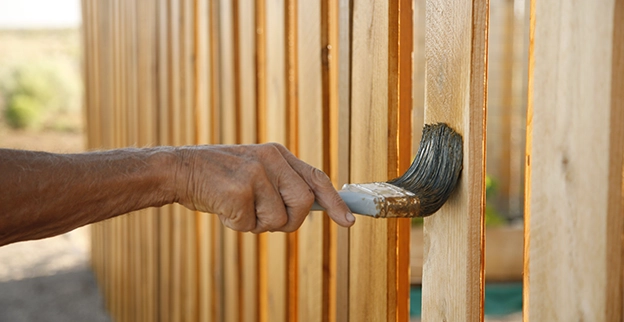
- Moisture enters end grain and checks. Freeze expands water and widens cracks.
- Snow load keeps surfaces wet for days. That pushes coating failure.
- De-icing salts on decks can stain and degrade soft coatings.
What about spring and fall?
- Frequent rain swings moisture content. Boards swell and shrink.
- Wind drives debris into open grain. That traps dirt under failing finish.
- Cool nights cause dew. Dew delays dry times and can blush the film.
How does summer affect finish?
- High UV breaks down resin. Color fades and film chalks.
- Heat speeds dry time. Too fast dry can trap solvent and weaken adhesion.
- Storm bursts add sudden wetting that exploits weak spots.
Seasonal paint window at a glance
| Month | Typical Highs | Moisture Risk | Paint Window |
|---|---|---|---|
| March | 40s to 50s | High | Limited. Watch night temps and dew. |
| April | 50s to 60s | Medium | Fair with dry stretches. |
| May | 60s to 70s | Medium | Good on dry days. |
| June | 70s | Low to Medium | Very good. Avoid midday heat. |
| July | 80s | Low | Good. Start early to avoid hot boards. |
| August | 70s to 80s | Low | Very good. |
| September | 60s to 70s | Low | Excellent. Stable temps. |
| October | 50s to 60s | Medium | Fair to good. Watch overnight lows. |
Local weather can shift. Plan for a 48 hour dry window. Check surface temperature, not just air temperature. Boards in sun can run 10 to 20 degrees hotter than air. Shade can run cooler.
How Long Does Fence & Deck Paint Last in Ohio?
Service life depends on prep, product, color, and exposure. Vertical surfaces shed water faster. Horizontal deck boards take more standing water and foot traffic. Expect shorter life on decks than fences.
| Surface & Coating | Typical Life in Cleveland | Notes |
|---|---|---|
| Fence, solid color acrylic | 5 to 8 years | Longer life with light colors and good sun. |
| Fence, oil alkyd primer + acrylic topcoat | 6 to 9 years | Better for knot bleed control. |
| Deck, solid color acrylic | 2 to 4 years | Traffic shortens life. Recoat sooner. |
| Deck, specialty deck coating | 3 to 5 years | Thicker film. Needs clean substrate. |
| Railings, solid color acrylic | 3 to 6 years | Hand contact and sun wear the film. |
Routine washing adds years. Recoat before failure. You avoid heavy scraping and save money.
Fence vs. Deck: Are the Painting Methods the Same?
What is different about fences?
- Vertical boards drain fast. Less standing water.
- Less traffic. No shoe grind. Lower abrasion.
- More end grain and posts to seal. Pay attention at the ground.
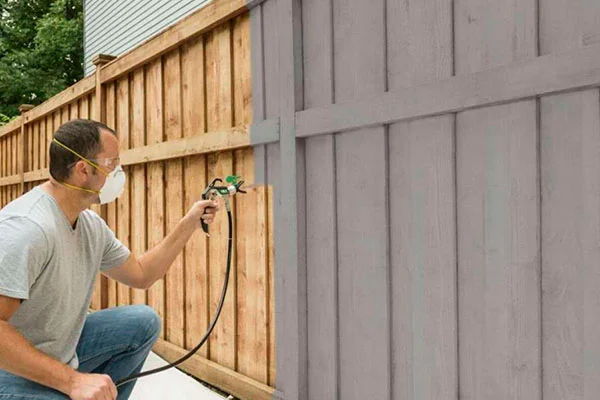
- Spray and back brush often speeds fence work.
What is different about decks?
- Horizontal boards collect water and dirt.
- Foot traffic scuffs paint. Furniture adds wear.
- Gaps and fasteners trap moisture. Heads need sealing.
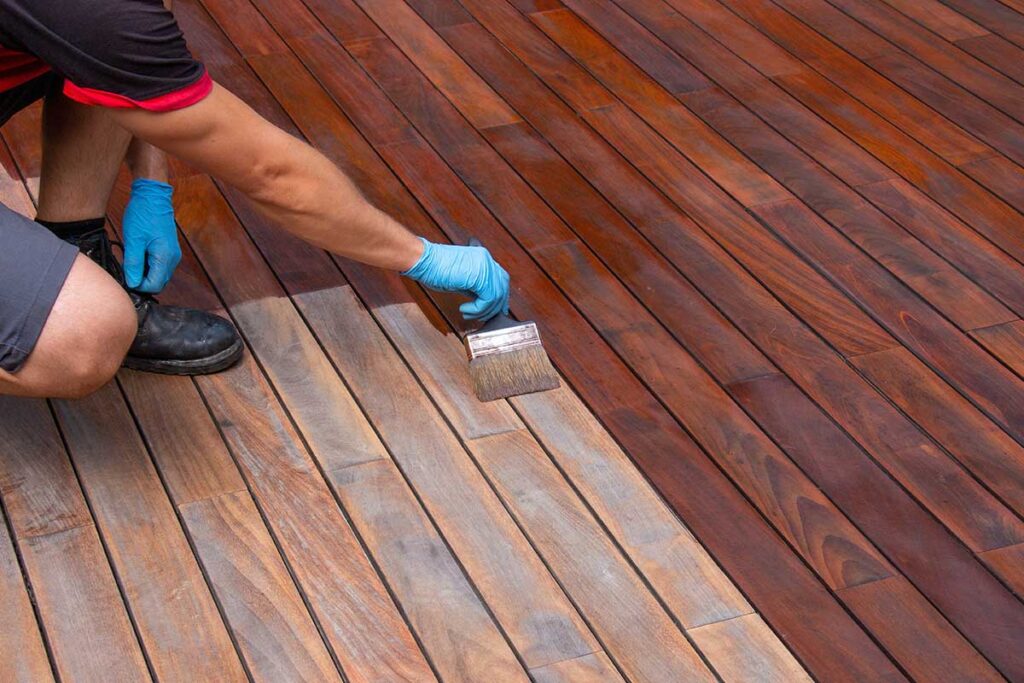
- Brush and roller control thickness. Back roll for uniform film.
Where methods overlap
- Clean, dry, dull, and sound substrate is non negotiable.
- Prime bare wood and stains before topcoat.
- Follow spread rate and recoat windows on the label.
What’s the Best Time of Year to Paint in Cleveland?
Target late spring through early fall. You want daytime temps in the 60s to 80s. You also want nights above 50. Dry, calm days make the best film.
See local timing and tips in our guide to seasonal painting trends in Ohio.
Schedule early for peak months. Crews book up fast in June, July, and September. If you need fence painting Cleveland homeowners rely on, plan your slot before the calendar fills.
Fence and Deck Color Ideas That Work
What colors hide dirt?
- Medium grays on decks hide shoe prints.
- Earth browns blend with soil splash on fences.
- Olive and taupe calm sun glare.
What colors resist fade?
- Lighter tints reflect UV and heat. They stay cooler and last longer.
- Dark colors absorb heat. They can show lap marks and chalk sooner.
Popular Cleveland combinations
- Warm gray deck with crisp white railings.
- Charcoal deck with black metal balusters.
- Cedar tone fence with black posts or caps.
- Classic white fence with light gray house trim.
How to choose
- Match house body and trim. Keep undertones consistent.
- Check HOA rules before you buy paint.
- Test large swatches on sun and shade sides.
- View at different times of day.
How to Prep Your Surfaces for a Quality Paint Job
What prep does a fence need?
- Inspection. Replace rotted pickets and posts. Tighten fasteners.
- Cleaning. Low pressure wash with a wood cleaner. Rinse well.
- Dry time. Let wood dry to below 15 percent moisture. Wait 24 to 72 hours after washing depending on weather.
- Scrape and sand. Remove loose paint and gray fibers. Feather edges.
- Spot prime. Use bonding primer on bare wood, knots, and metal heads.
- Masking. Protect concrete, plants, and hardware.
What prep does a deck need?
- Inspection. Check joists and ledger. Replace split boards. Set fasteners flush.
- Deep clean. Use deck cleaner or stripper if old finish is failing. Rinse to neutral pH if you used stripper.
- Dry time. Deck boards need thorough drying. Aim for 24 to 48 hours of dry weather before coating.
- Sand. Hit high grain and edges. Vacuum dust.
- Prime or condition. Prime bare wood. On dense species, use a manufacturer approved conditioner if required.
- Masking. Cover siding, posts, and adjacent landscaping.
Moisture and temperature checks
- Use a moisture meter on suspect boards.
- Confirm surface temp is within label limits.
- Watch shade lines that can cool film too fast.
What Kind of Paint Works Best Outdoors?
Fence coatings
- Solid color 100 percent acrylic. Flexible, breathable, and easy to recoat.
- Oil alkyd primer under acrylic topcoat on knots and tannin rich species like cedar.
- Rust inhibitive primer on metal posts and brackets.
Deck coatings
- Solid color acrylic deck coatings for best UV block. Recoats cleanly.
- Specialty high build deck resurfacers for worn boards. Follow spread-rate and cure steps.
- Anti-slip additives for steps and landings.
Color and sheen choices
- Flat or low sheen hides flaws and reduces glare.
- Mid-tone colors balance heat and hide.
- Light colors resist fade but show dirt more. Medium colors are a good middle ground.
Why warranties matter
Read both product and contractor warranties. They explain maintenance, coverage, and exclusions. See what to expect in our note on Cleveland painting warranties. Proper prep and the right film build protect your coverage.
Should You Hire a Pro or DIY It?
When DIY can work
- Small fence sections or a simple gate repaint.
- Newer deck with light prep and no prior failures.
- You own the tools and can commit to weather windows.
When to hire a pro
- Old coatings are peeling or alligatoring.
- Mixed substrates. Wood, metal, and masonry meet.
- Complex rails, spindles, lattice, or heights.
- You need fast turnaround before a party or sale.
What you get with a pro
- Moisture-safe scheduling and weather checks.
- Industrial washers, sprayers, and dust control.
- Detailed prep. Tight film build. Clean lines.
- Written scope, timelines, and warranty.
If you want an efficient start and a durable finish, hire a local team. For fence painting Cleveland residents can trust, experienced crews reduce risk and rework.
Cost to Paint a Fence or Deck in Cleveland: A Breakdown Table
Prices vary by size, height, condition, access, and design. These typical Cleveland ranges help you plan. Final quotes depend on a site visit.
| Scope | Unit | Typical Range | Includes |
|---|---|---|---|
| Fence painting, 4 to 6 ft, solid color | per linear foot | $5 to $12 | Wash, scrape, spot prime, two coats |
| Fence, tall or complex profiles | per linear foot | $10 to $18 | Extra masking, ladders, detail work |
| Deck floor, solid color paint | per sq ft | $3 to $6 | Wash, sand, spot prime, two coats |
| Deck rails and spindles | per linear foot of rail | $12 to $25 | Hand work and small parts coverage |
| Deck resurfacer system | per sq ft | $5 to $9 | High build product and time to cure |
| Heavy stripping of failed coatings | per sq ft | $1.50 to $3 | Chemical or mechanical removal |
| Carpentry repairs | per hour or per board | $65 to $95/hr or $10 to $25/board | Board swaps, post repairs |
| Power washing only | per project | $150 to $450 | Detergent wash and rinse |
Ways to save:
- Bundle fence and deck in the same visit.
- Handle small plant trimming before the crew arrives.
- Choose colors close to the current tone to reduce coats.
- Stay on a maintenance cycle to avoid stripping costs.
What to Look For in a Painting Contractor
Questions to ask
- What prep steps are in the scope. Get it in writing.
- What primers and topcoats will you use. Ask for product data sheets.
- How will you protect landscaping and hardscape.
- How do you handle weather delays and moisture checks.
- What is the workmanship warranty and what is excluded.
Red flags
- Vague prep and product answers.
- Cash only and no written contract.
- No local references or photos.
- No plan for cleanup and disposal.
Why local matters
- Local crews know Cleveland substrates and weather.
- They source from nearby stores for fast touchups.
- They can support warranty service quickly.
FAQs About Fence & Deck Painting in Cleveland
How dry must wood be before painting?
Below 15 percent moisture is a safe target. After washing, wait 24 to 72 hours depending on sun, wind, and temperature.
Can you paint pressure treated wood?
Yes. Let new treated lumber dry to a paintable moisture level. Use an oil alkyd primer on knots and any extractive heavy areas. Topcoat with 100 percent acrylic.
What if the forecast shows overnight dew?
Stop early to allow cure before dew forms. Dew on uncured paint can dull gloss and slow cure. Check product recoat and dry-to-rain times.
How many coats are best?
Two finish coats over primer are standard for fences. Deck floors often need two finish coats. Follow the label spread rate to build the correct film.
Paint or solid stain on a deck?
Both are film forming and look similar. Solid stain can offer easier future recoats. Paint can give better hiding on patched boards. Pick one system and stick with it.
Will paint peel on a deck?
It can if prep is poor, moisture is high, or film is too thick. Good washing, dry wood, and the right spread rate reduce risk.
Do I need to sand a whole deck?
Spot sanding often works. Full sanding helps if old finish is glossy or failing in many areas. Always feather edges where you scraped.
Can you match HOA colors?
Yes. Provide the HOA code or a sample. We can tint to match.
How soon can I use the deck after painting?
Light foot traffic after 24 to 48 hours for many acrylics. Heavy use and furniture after 72 hours or as the label states. Cooler temps extend cure time.
How often should I wash and maintain?
Wash once a year in spring. Inspect for cracks, rust stains, and open joints. Touch up small areas before they grow.
Conclusion
Paint is your best defense against Cleveland weather. Clean wood, proper dry time, the right primer, and a quality acrylic topcoat deliver a longer life and a cleaner look. Recoat before failure and you will save time and money. If you want reliable results, schedule a visit with Artisan Painting. We help you choose colors, set the timeline, and protect your property from start to finish. For quick planning, remember that fence painting Cleveland projects book fastest from late spring through early fall.
Get a Free Quote for Your Fence or Deck
Shortcode:
